Why Dentists Choose Screw-Retained Zirconia Bridges for Full-Arch Restorations
Clinical Advantages of Screw-Retained Zirconia Full-Arch Bridges
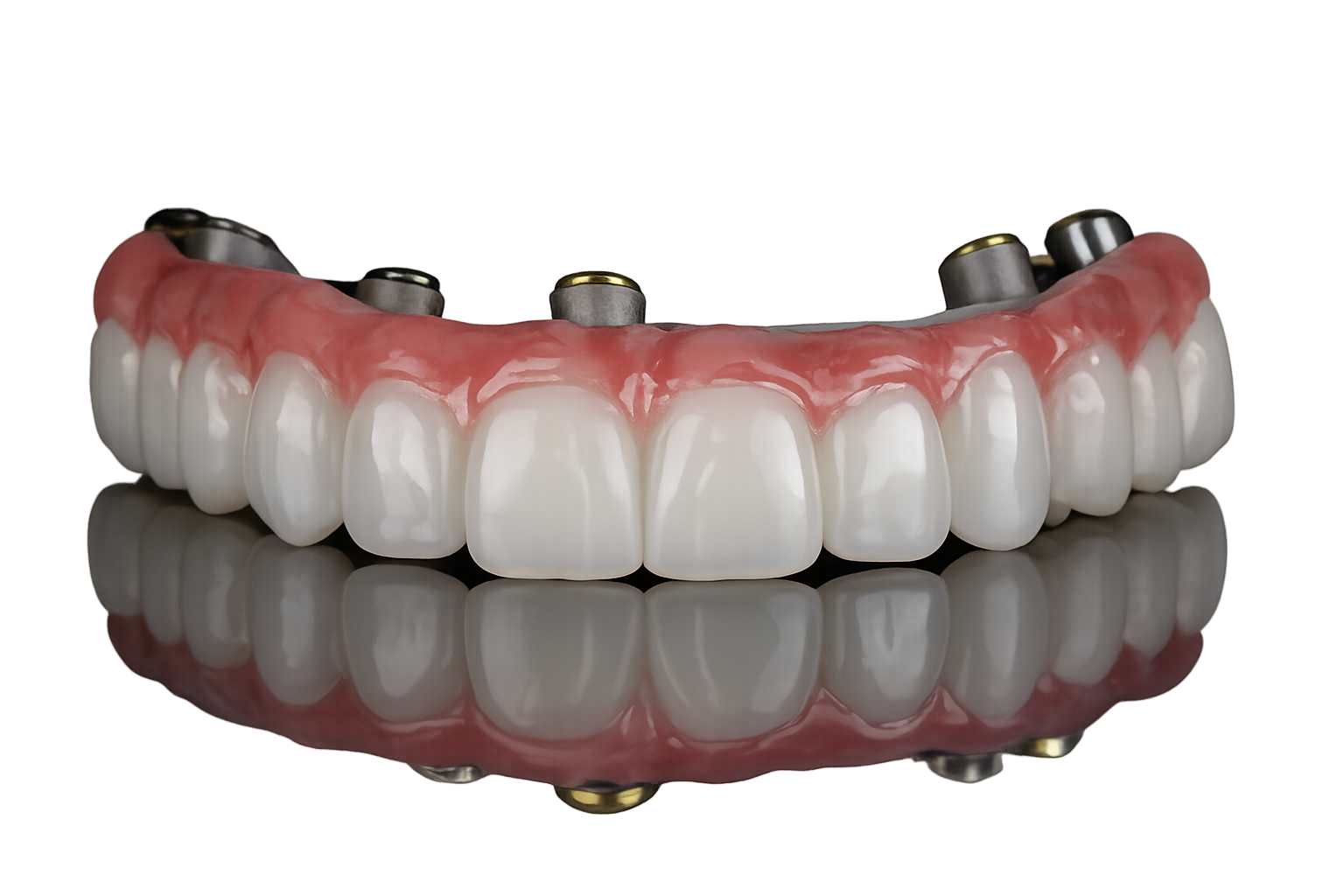
Screw-retained zirconia has become the default choice for full-arch implant restorations among experienced restorative dentists, and the reasons are clinical, not preferential. The combination of retrievability, material durability, peri-implant compatibility, and CAD/CAM precision addresses the specific demands of full-arch cases in ways that cement-retained and alternative material options do not consistently match.
For dentists in Idaho placing or restoring All-on-X cases, understanding the clinical rationale behind this choice, and what it requires from the lab, is what separates predictable outcomes from avoidable complications.
Why Screw-Retained Design Is the Clinical Standard for Full-Arch Implant Bridges
Retrievability is the non-negotiable advantage of screw-retained full-arch restorations. Full-arch cases are long-term restorations for patients who will need access to implant components, soft tissue evaluation, and occasional prosthetic maintenance over the course of years. A cemented full-arch bridge makes all of that significantly more difficult and, in many cases, destructive to access.
Cement excess in peri-implant sulcular tissue is also a documented contributor to peri-implantitis, and the deeper the implant platform, the higher the risk of residual cement that cannot be fully retrieved. In full-arch cases where posterior implants are often placed at depth and angulated distally, cement management becomes a genuine clinical liability. Screw retention eliminates that variable entirely.
The access channel is the trade-off, and in most full-arch designs it is a manageable one. With CAD/CAM design and angled screw channel technology, access openings can be positioned to minimize esthetic and occlusal impact without compromising retrievability.
Why Zirconia Outperforms Alternative Materials in Full-Arch Applications
Zirconia's dominance in full-arch restorations is driven by its mechanical properties under the load conditions that full-arch cases generate. Full-arch prosthetics carry occlusal forces across an extended span with no natural tooth support and limited shock absorption. PMMA provisionals fracture under those conditions over time. Hybrid ceramic and acrylic-based final prosthetics wear, chip, and require replacement at intervals that add long-term cost to the patient and case management burden to the practice.
High-strength zirconia, particularly in monolithic form, resists fracture and wear at a level that matches the functional demands of full-arch loading in a way no polymer-based material reliably does. It is also biocompatible, with surface characteristics that support healthy peri-implant soft tissue response compared to acrylic alternatives that can harbor bacteria and contribute to soft tissue inflammation over time.
Esthetically, modern zirconia formulations have closed the gap with more translucent materials significantly. For full-arch cases where the esthetic zone is a priority, high-translucency zirconia options deliver results that were not achievable with earlier generations of the material.
Monolithic vs Layered Zirconia: Matching Material Selection to the Clinical Situation
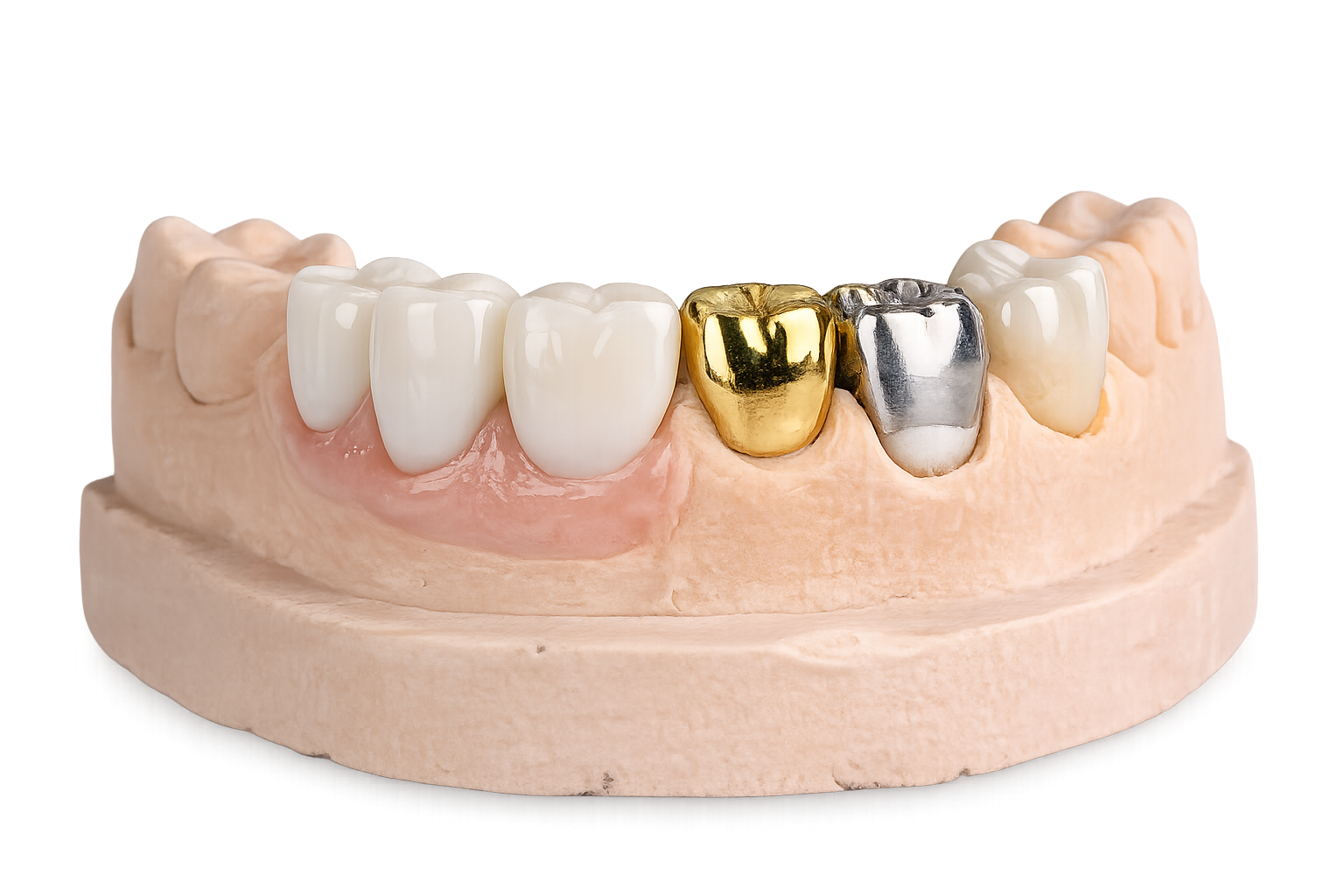
Monolithic zirconia is the stronger choice for full-arch restorations in most clinical situations. The absence of a feldspathic layering means there is no veneer material to chip or fracture under occlusal load, which is the primary failure mode of layered full-arch restorations and the source of a disproportionate share of remake and repair cases.
Layered zirconia remains appropriate in cases where anterior esthetic demands require the depth and light transmission characteristics that monolithic zirconia does not fully replicate, and where the occlusal scheme can be managed to reduce the load on layered surfaces. That is a specific clinical situation, not a default.
The decision between monolithic and layered should be made at the case planning stage with lab input, not at delivery. A CDT who understands the patient's occlusal load, parafunctional history, and esthetic requirements can identify the right material selection before fabrication begins rather than after a layered case fractures at the six-month post-delivery appointment.
How Implant Angulation Shapes the Lab Design Requirements
Posterior implant angulation in All-on-X cases is planned to maximize bone contact and avoid anatomical structures, which regularly produces implant axes that do not align with ideal screw access placement. Managing that angulation at the prosthetic level is a lab design responsibility, and how well it is handled determines whether the final restoration functions cleanly or requires chairside compromise.
Angled screw channel technology allows access openings to be redirected up to approximately 25 degrees from the implant axis, which accommodates most posterior angulation scenarios without relocating the access channel to an esthetically or occlusally problematic position. For cases with more significant angulation, prosthetic design requires careful planning of the emergence profile, connector cross-sections, and access channel placement to avoid stress concentrations that compromise long-term structural integrity.
This is not a decision that can be made chairside after the restoration is fabricated. It requires digital planning, scan body data, and a lab technician who understands the biomechanical implications of the implant positions being restored. For dentists in Pocatello, Twin Falls, Ammon, and throughout Idaho placing angulated posterior implants in full-arch cases, the lab's digital workflow capability is directly tied to how predictably those cases deliver.
How Lab Execution Determines Full-Arch Screw-Retained Outcomes
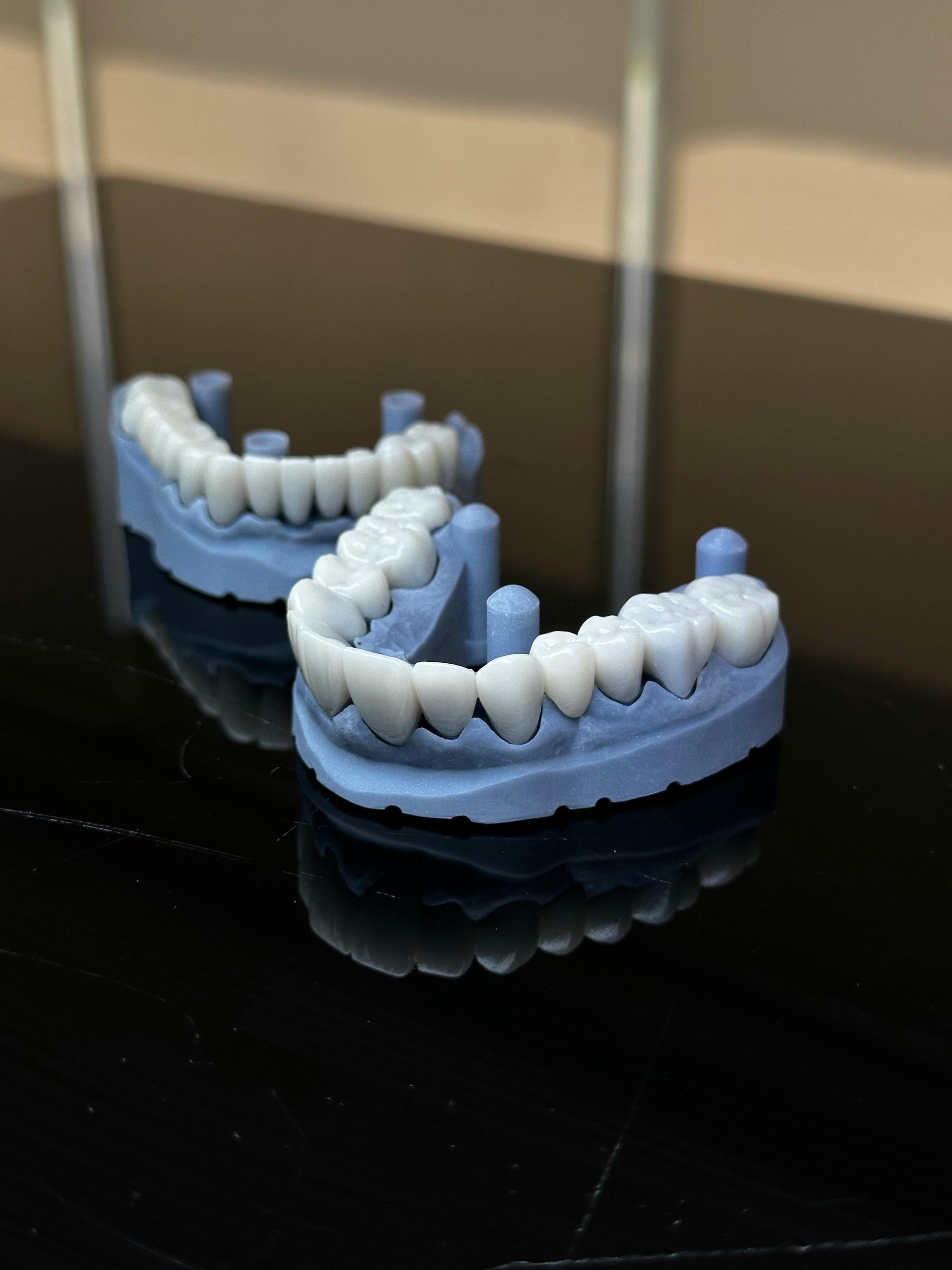
A well-designed screw-retained zirconia bridge that does not seat passively is a problem that no amount of clinical skill resolves at delivery. Passive fit across a full-arch span requires accurate digital capture of implant positions, precise CAD design of the framework, and milling tolerances that hold across the full length of the arch. Any deviation in that chain produces seating complications, component stress, and the kind of bone-level load distribution that contributes to implant failure over time.
CDT oversight at each stage of fabrication is what keeps that chain intact. At Upper Valley Dental Laboratory, every full-arch case moves through CDT-reviewed design, material selection, and quality verification before it leaves the lab. Digital case submission, provisional-to-final communication, and proactive flagging of scan or record quality issues are built into how we manage full-arch cases, not applied selectively.
For dentists placing All-on-X restorations in Rexburg, Ammon, Pocatello, Twin Falls, and throughout Idaho, the lab relationship on full-arch cases is not a background variable. It is a primary determinant of whether the definitive restoration seats accurately, functions durably, and stays out of the chair after delivery.
Full-Arch Zirconia Lab Services for Dentists Throughout Idaho
Upper Valley Dental Laboratory provides screw-retained zirconia
full-arch restorations for dental practices in
Rexburg,
Ammon,
Pocatello,
Twin Falls, and throughout Idaho. Our CDT-owned and operated lab supports the full All-on-X workflow from provisional design through definitive delivery, with digital integration, defined communication protocols, and the material and design expertise that full-arch cases require.
If you are placing full-arch implant cases and looking for a lab relationship built around clinical precision and predictable outcomes,
contact
us to discuss your case requirements and how we work.